Cidade Matarazzo: when engineering restores the past and builds the future of São Paulo


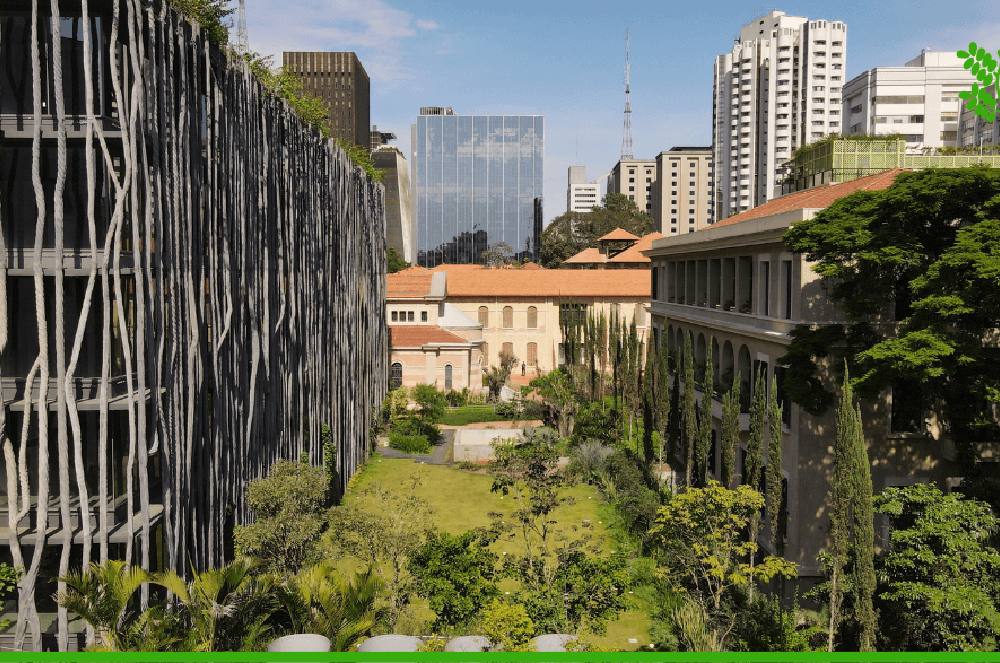
Among the great milestones of contemporary Brazilian engineering, few projects represent as clearly the union between historical preservation, construction innovation, and architectural sophistication as Cidade Matarazzo.
Located in the heart of São Paulo, next to Avenida Paulista, the development transformed the former hospital complex founded by Francesco Matarazzo in the early 20th century into one of the most emblematic urban regeneration projects in the country.
More than a high-end real estate development, Cidade Matarazzo is an example of how engineering can preserve the memory of a city while also creating new benchmarks for sustainable urban development.
A legacy initiated by the Matarazzo family
The original complex began construction in the early 20th century to house Hospital Umberto I, designed to serve the Italian community in São Paulo.
For decades, the buildings played an important social and healthcare role, becoming part of the city's collective memory.
Over time, the structures were deactivated, until a proposal emerged to restore the architectural complex and give it a new purpose while preserving its historical value.
Engineering in service of preservation
The restoration of the buildings required highly specialized engineering solutions.
Five structures listed by Condephaat had their façades, roofs, frames, and original elements carefully restored.
At the same time, new structures were incorporated to meet modern requirements for safety, accessibility, sustainability, and operation.
Companies such as Engeform Engenharia participated in key stages of the project, carrying out retaining structures, foundations, excavations, and concrete works.
One of the most sophisticated projects in Brazil
Cidade Matarazzo houses a mixed-use complex that includes:
- luxury hotel;
- residences;
- restaurants;
- shops;
- cultural spaces;
- wellness areas;
- lush gardens.
The development has become an international reference by integrating historic architecture, contemporary design, and high-end hospitality.
Among its highlights is Rosewood São Paulo, considered one of the most sophisticated hotels in Latin America.
The technical challenge of building while preserving
From an engineering perspective, the project presented extraordinary challenges:
- full preservation of century-old buildings;
- deep excavations in a densely urbanized area;
- structural reinforcement without altering historical characteristics;
- integration between modern systems and old constructions;
- execution in a central area with high logistical complexity.
These challenges required multidisciplinary coordination involving civil engineers, architects, restoration experts, and heritage specialists.
Sustainability and urban regeneration
Cidade Matarazzo also stands out as an example of sustainable urban development.
By reusing existing structures and revitalizing a historic area, the project reduced environmental impacts and enhanced architectural heritage, avoiding demolitions and preserving urban identity.
The development demonstrates that restoring can be just as strategic as building from scratch.
A symbol of contemporary Brazilian engineering
If in the early 20th century Hospital Matarazzo symbolized progress and social care, in the 21st century Cidade Matarazzo represents a new phase of Brazilian engineering: the ability to combine memory, technology, sustainability, and a vision for the future.
In the “120 Years of Engineering” series, this project deserves recognition for showing that great works are not just physical structures, but interventions capable of transforming cities and redefining their historical heritage.
Source: OE
Want to follow more high-end projects, insights, and inspirations? Visit our social media and see up close how we turn engineering into value.